Feature spotlight
Multi-level storage hierarchy
Represent complex warehouse layouts with a hierarchy that mirrors how your storage space is actually organized.
Step 1: Understand the storage structure
The system follows a 5-level storage hierarchy to organize inventory efficiently:
Zone → Aisle → Rack → Level → Bin
- A Warehouse can have multiple Zones
- Each Zone can contain multiple Aisles
- Each Aisle can have multiple Racks
- Each Rack can have multiple Levels
- Each Level contains multiple Bins
All inventory items are stored at the Bin level, ensuring precise tracking.
Step 2: Logical organization of storage
This hierarchical structure helps you divide your warehouse into smaller, manageable sections.
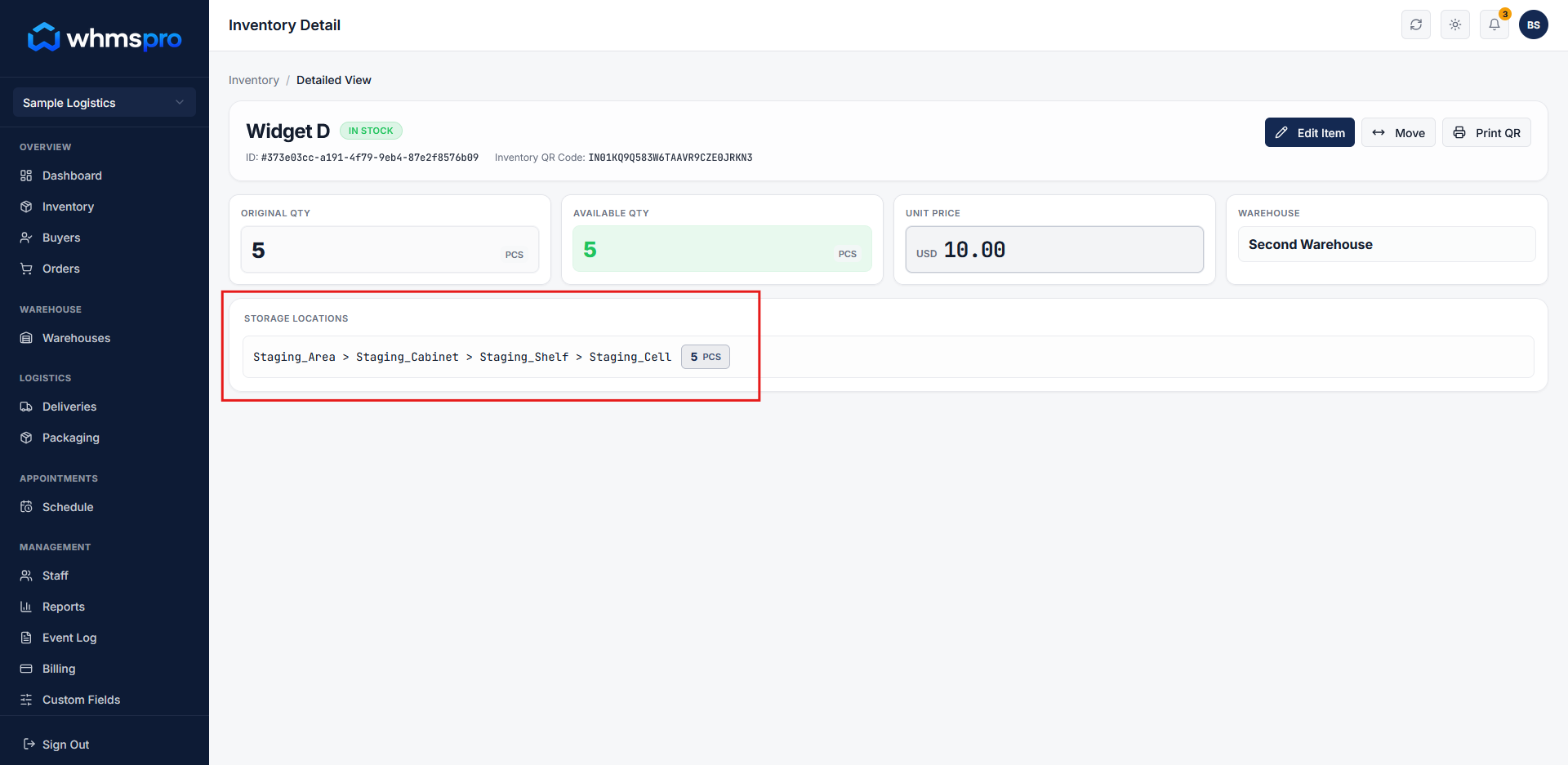
Example structure:
- Z1 → A1 → R1 → L1 → B1
- Z1 → A1 → R1 → L1 → B2
- Z1 → A1 → R2 → L1 → B1
Each level adds more clarity and control over how inventory is placed and accessed.
Step 3: Efficient inventory placement
Since items are stored at the Bin level, you can:
- Track exact item location
- Avoid misplaced inventory
- Improve picking and packing accuracy
This ensures every product has a clearly defined position in the warehouse.
Step 4: Scalable warehouse management
The multi-level hierarchy allows you to scale operations easily:
- Add more zones as warehouse grows
- Expand aisles, racks, and bins dynamically
- Maintain structured storage even with large inventories
Step 5: Structured and optimized operations
This approach helps you:
- Maintain consistent storage organization
- Improve warehouse navigation
- Reduce operational errors
A well-defined hierarchy leads to faster and more efficient warehouse processes.